
History







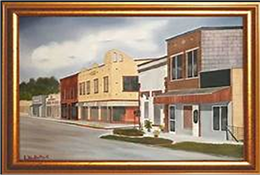

A BRIEF HISTORY OF CENTER HILL, FLORIDA
Now pull up a chair, because Center Hill did not just roll out of bed one morning with a name tag on. Long before folks were arguing over traffic tickets, post office names, or whose beans looked the prettiest, this place had already lived a whole heap of history.
Way back around 1800, near the Wahoo Swamp, there was a settlement folks called Abraham’s Old Town. Later it was known as Peliklakaha, which is a fine name, though I will admit it can tangle a man’s tongue quicker than a sack full of fishhooks. It was home to Black Seminoles, maroons, and Seminoles, including Chief Micanopy for a time. Many of the Black Seminoles had come out of Georgia, looking for freedom and a chance to live by their own labor instead of somebody else’s command.
The village was no little wide spot in the road, either. About a hundred souls lived there. They raised crops, built homes from daub, thatch, and lumber, and traded with people passing along the old trails. Rice, peanuts, and corn grew well in that soil. More than one government man came through and noticed the land was rich. Of course, when a government man notices good land, you had best keep one eye open and the other one halfway open.
Abraham, the man the old town was named for, was no ordinary fellow. He had been enslaved, gained his freedom, worked with the Seminoles, and served as an interpreter and recruiter. When word came that Major Dade’s soldiers would be moving through the area, Abraham figured trouble was fixing to walk right up the road wearing boots. After the Dade battle in December of 1835, Abraham left the village.
Not long after that, the Second Seminole War brought fire and fear to the place. In 1836, United States troops came into the Peliklakaha area and burned the village. The people had already fled into the Wahoo Swamp, which was wise. A swamp may be full of mosquitoes big enough to vote, but sometimes it is still better company than an army.
There was more fighting in 1842, when Colonel William Worth attacked Halleck Tustenuggee near Peliklakaha. The Seminole fighters built a log barricade, the soldiers came at them, and the camp was burned. Not long afterward, Halleck Tustenuggee surrendered with members of his family, and Worth declared the Second Seminole War over later that year.
After those hard years, new settlers came into the area. The Mobley and Beville families were among the early ones. As for the name Center Hill, folks give credit either to postmaster Thomas Spicer or Carrie Lovell. Spicer said the town was the hub of things, and Lovell said it sat on a hill near the center of the county. Either way, it beat calling the place “That Patch of Ground Where Everyone Keeps Asking for Directions.” In 1925, Center Hill officially became a city.
Then came the bean days, and my goodness, Center Hill could brag a little then. In the early 1900s, it was known far and wide for string beans. By 1931, beans, peas, and lima beans were being shipped off to places like Baltimore, Boston, New York, Chicago, and Detroit. That is right – little Center Hill was feeding big-city people who probably thought vegetables came from a grocery shelf and not from some farmer sweating through his shirt.
But farming has a way of reminding people who is really in charge, and it is not always the fellow holding the hoe. By the mid-1930s, the soil was wearing out, the water table had dropped, and farmers blamed drainage work around Jumper Creek for drying things up. Irrigation became necessary, bean production faded, and by 1970 the population had dropped hard. Still, even in the late 1980s, farmers were bringing peppers, cucumbers, squash, tomatoes, and watermelons into Center Hill for packing and shipping.
Then the 1990s came along, and Center Hill got itself a different sort of reputation – a speed trap. The town received a federal community policing grant and hired more officers, but before long, drivers were complaining about traffic tickets, especially speeding tickets. By 1997, several officers, including the police chief, had left the department. That just goes to show you: beans may put a town on the map, but speeding tickets can make sure everybody remembers the map.
In 1998, archaeologists from the University of Florida began digging in a pasture a couple of miles from town, looking for the old Black Seminole village of Peliklakaha. They found bits of iron, stoneware, glass beads, nails, and pottery. Little scraps, you might say – but scraps can talk, if you have sense enough to listen. Those finds helped remind folks that this was once the largest known Black Seminole village, and that the people who lived there were not just names in a book. They cooked, traded, farmed, built homes, raised families, and tried to make a life.
The 2000s brought another strange chapter, and not the kind you expect in a quiet town’s history. At Savage Kingdom, an exotic animal park, a Siberian tiger named Tie killed a worker in 2001 while he was repairing a cage. It was a terrible thing, and not the first serious tiger incident at the park. A few years later, the park lost its license permanently. That is one lesson nobody needs twice: if your neighbor says he has a tiger, do not ask if it is friendly. Ask if the gate is locked.
So there you have it. Center Hill has been a Black Seminole village, a farming town, a bean-shipping place, a little city with a big memory, and once or twice, a place where history came stomping through without wiping its feet. It has seen courage, hardship, crops, conflict, archaeologists, police cars, and even tigers. For a town its size, Center Hill has carried more stories than a mule carries burrs – and most of them are worth telling again.